What happened
On August 29, 2026, IEEE Spectrum published an article titled "Noodling on Nuclear Engines" that draws a line from historic napkin sketches to a new nuclear engine design. The article recalls that in 1982, Joseph “Rod” Canion and two colleagues from Texas Instruments sketched out the concept for Compaq’s portable PC on a napkin at the House of Pies in Houston. In 1996, Felix Zandman, founder of Vishay Intertechnology, used a napkin at Husker Steak House in Columbus, Neb., to draft a design for a power metal strip resistor, a component that became essential in power-management applications across industrial, automotive, and consumer sectors. That napkin now resides at the Smithsonian’s National Museum of American History.
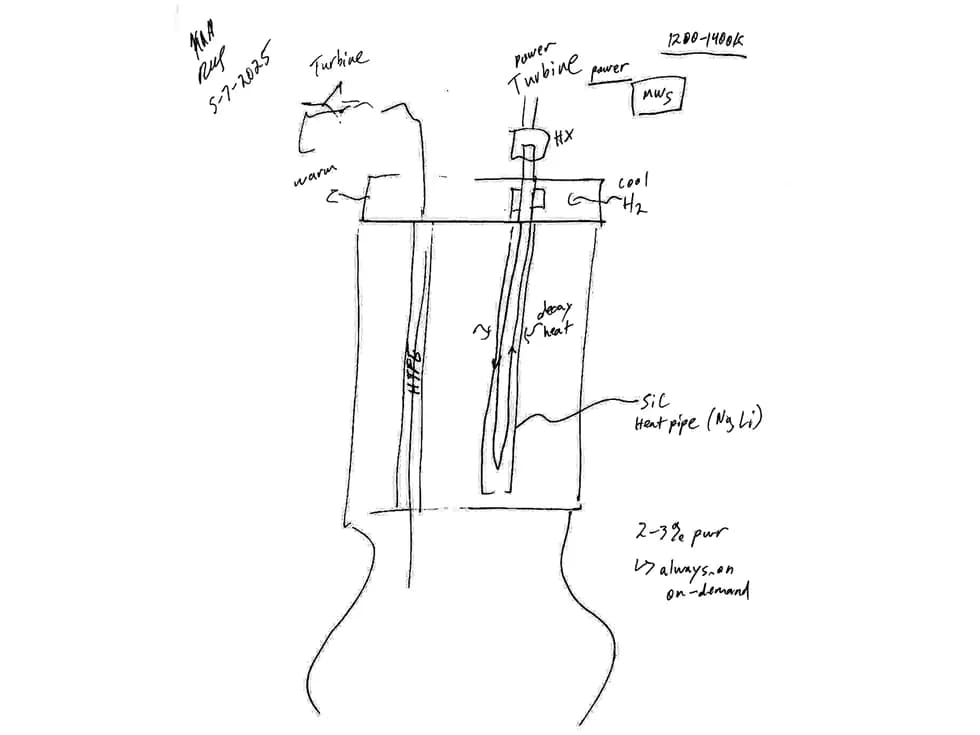
The article then connects these historical anecdotes to the subject of nuclear engines, implying that a similar napkin-based design process has been applied to a new nuclear engine concept. The details of the nuclear engine design itself are not provided in the excerpt.
Why it matters
The story underscores the role of informal, spontaneous creativity in technological breakthroughs. By linking the nuclear engine design to the napkin sketches that led to Compaq and Vishay, the article suggests that significant innovations can emerge from simple beginnings. The inclusion of the Smithsonian artifact highlights the cultural and historical value of such sketches, and the new nuclear engine design may follow a similar trajectory of importance.