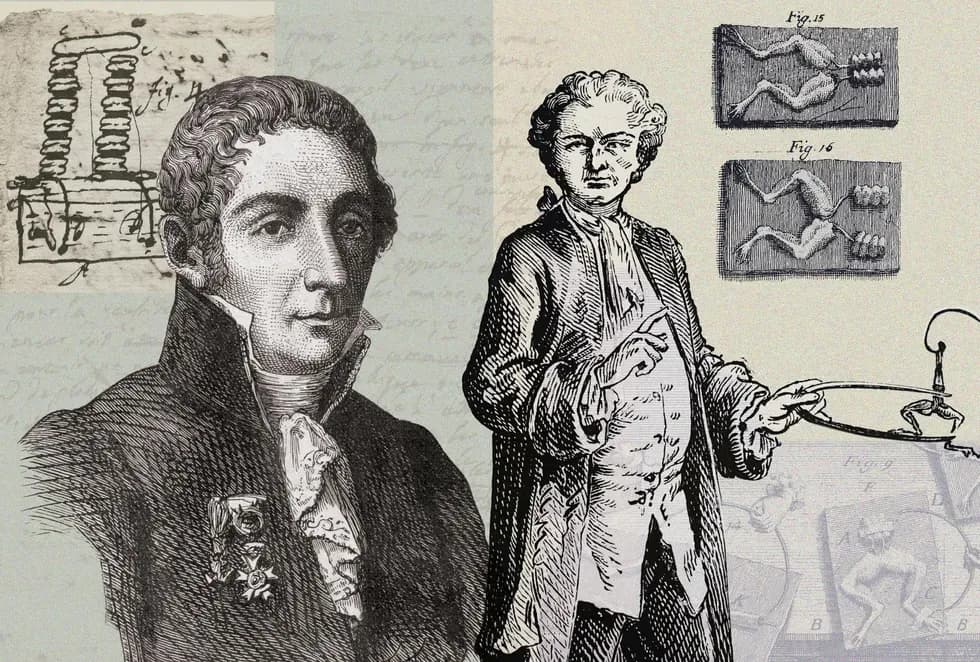
A display case on the lower level of the Faraday Museum at the Royal Institution in London holds an unassuming stack of gray metal discs and blotting paper. The object, invented in 1799, is the starting point of today's multibillion-dollar global battery industry, according to IEEE Spectrum.
The invention grew out of a disagreement between Alessandro Volta, the Italian physicist for whom the unit of electrical potential is named, and his friend Luigi Galvani, a well-respected Italian physician. The dispute centered on a dead frog.
A Dispute Over Animal Electricity
Galvani was a respected physician who believed in animal electricity. Volta disagreed, and that disagreement led to the creation of the first battery. The exact nature of the frog's role is detailed in the IEEE Spectrum report, which notes the invention emerged from the debate.
The object itself is not obviously significant, yet it represents a pivotal moment in the history of technology. The stack of metal discs and blotting paper is now preserved as a historical artifact.
From Laboratory Curiosity to Global Industry
The invention in 1799 laid the groundwork for the modern battery industry. Today, batteries power everything from smartphones to electric vehicles, a multibillion-dollar global market. The Faraday Museum display connects that industry to its humble origins.
Volta's name is immortalized in the unit of measurement for electrical potential, a testament to his contributions. The dead frog dispute, once a scientific disagreement, now stands as a foundational story in the history of electricity.
What Remains Unanswered
The IEEE Spectrum article does not specify what happened to Galvani or how the dispute concluded. It also does not detail the exact construction of the battery or its early uses. The display at the museum offers a tangible link to that moment, but the full story of the frog's role remains partially untold.