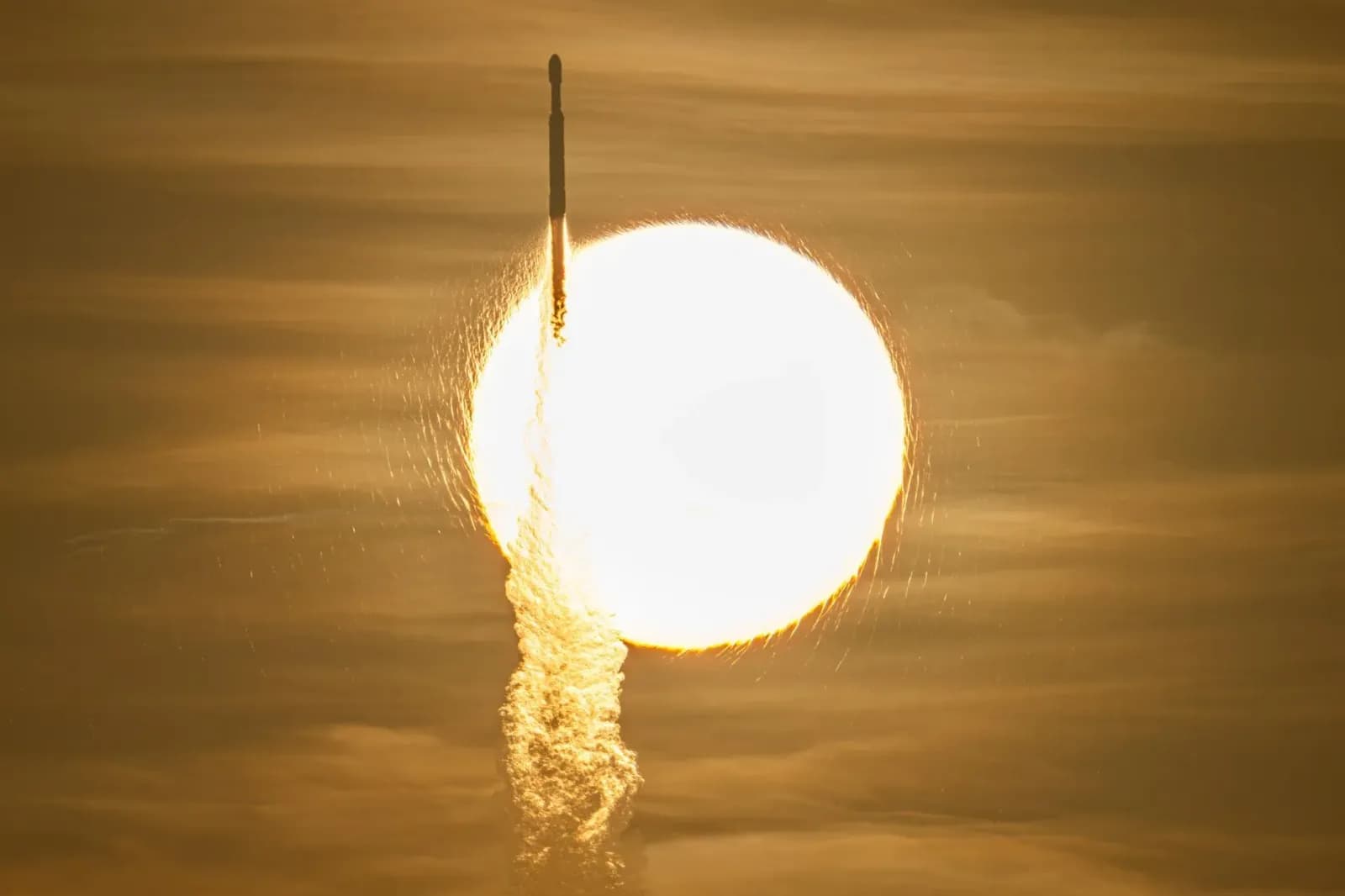
The Nancy Grace Roman Space Telescope launched successfully on August 30, 2026, according to The Verge. The mission, which had faced funding struggles and a name change, is now on a three-month, one-million-mile journey to its orbit at the second Sun-Earth Lagrange point (L2), beyond the Moon.
From that vantage point, Roman will conduct an unprecedented survey of the universe. Its field of view is described as unprecedented, though the source does not specify its size or capabilities.
A launch after years of uncertainty
The telescope's path to orbit was not smooth. The Verge reports that the mission experienced funding struggles and a name change before reaching the launch pad. The successful launch marks the end of that turbulent period.
A one-million-mile trip to L2
Roman will spend three months traveling to L2, a stable point in space about one million miles from Earth. There, it will join other observatories that benefit from the region's stable thermal and gravitational environment.
An unprecedented survey of the universe
The telescope's primary goal is to study dark matter and dark energy, two of the most mysterious components of the cosmos. Its wide field of view will allow it to survey large swaths of the sky, potentially revealing new details about the universe's structure and expansion.
The Verge's report does not specify when Roman will begin its science operations after reaching L2, nor does it detail the exact instruments or survey plans. The next milestone is the arrival at L2 in about three months.