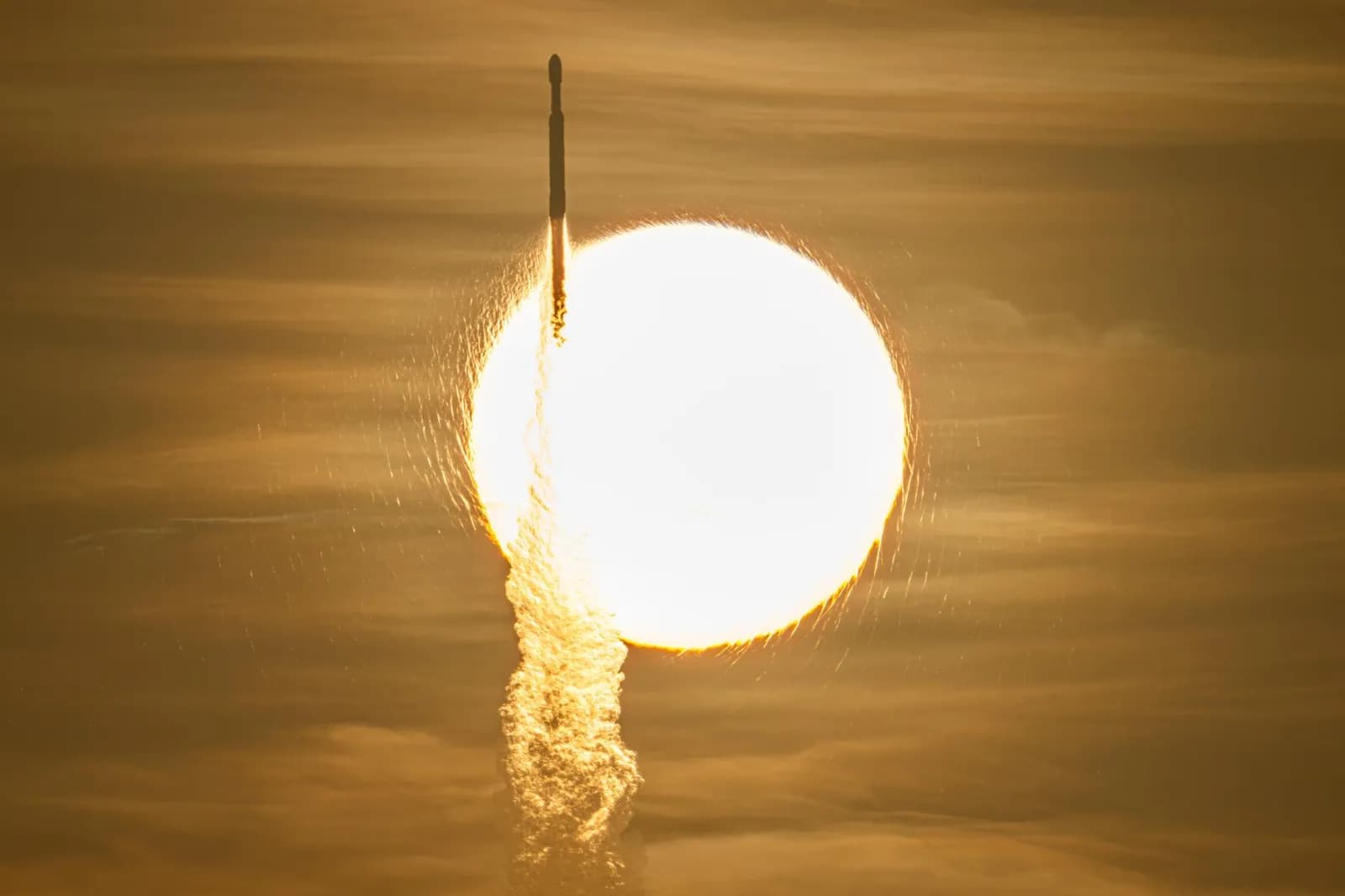
NASA’s Nancy Grace Roman Space Telescope lifted off at 7:26 a.m. EDT Sunday from Launch Complex 39A at the agency’s Kennedy Space Center in Florida, aboard a SpaceX Falcon Heavy rocket. The mission is now on a three-month, million-mile journey to its final orbit, where it will begin probing the universe’s darkest secrets.
Roman pairs a large field of view with high resolution, a combination that will let it survey vast swaths of the sky in detail. The telescope is named after Nancy Grace Roman, NASA’s first chief astronomer, and is designed to investigate dark energy, dark matter, and exoplanets.
A three-month trek to a working orbit
The spacecraft’s journey will take about three months, covering roughly a million miles. Once it reaches its destination, Roman will settle into an orbit that allows it to observe the cosmos without the interference of Earth’s atmosphere. The launch marks the start of a mission that NASA expects to yield a wealth of data on the universe’s expansion and the distribution of matter.
A large field of view for cosmic surveys
Roman’s design emphasizes a wide field of view, enabling it to capture large portions of the sky in a single observation. This capability is key to its primary goals: mapping dark matter, measuring the effects of dark energy, and discovering exoplanets. The telescope’s resolution will allow scientists to study distant galaxies and supernovae with unprecedented clarity.
What happens next
The next milestone is the spacecraft’s arrival at its final orbit, expected in about three months. Once there, Roman will undergo commissioning and calibration before beginning its science operations. The first images and data are anticipated to follow, offering a new window into the dark universe.