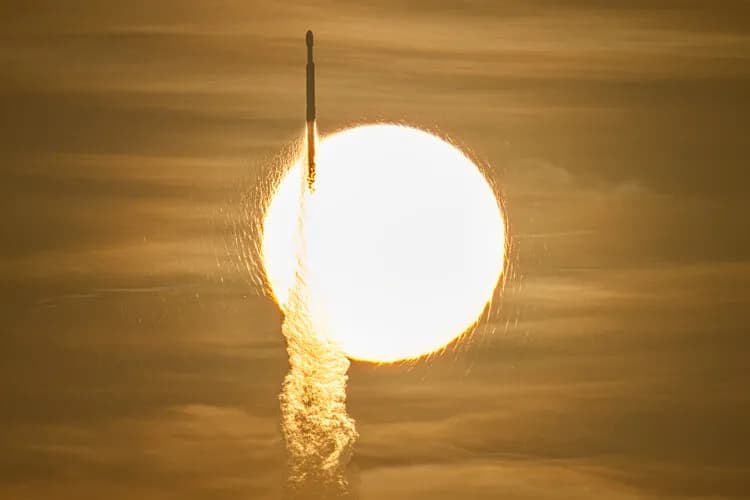
NASA's Nancy Grace Roman Space Telescope lifted off on a SpaceX Falcon Heavy rocket from NASA's Kennedy Space Center in Florida at 07:26 EDT (12:26 BST, 13:26 CEST) on 30 August 2026. The launch marked the start of a mission to survey the sky in visible to near-infrared light, with the goal of revealing the nature of dark energy and dark matter.
The telescope will also investigate the true diversity of exoplanets in our galaxy. Roman is a NASA-led mission, with the European Space Agency (ESA) contributing star trackers, batteries, and detectors for the coronagraph instrument.
ESA's role in the mission
ESA's contributions to Roman include star trackers for navigation, batteries for power, and detectors for the coronagraph instrument, which is designed to block starlight to image exoplanets directly. These components are part of a broader collaboration between NASA and ESA on the mission.
What Roman will study
Roman's survey will cover visible to near-infrared wavelengths, allowing it to probe the effects of dark energy and dark matter on the large-scale structure of the universe. Its exoplanet census will complement other observatories by providing a statistical view of planetary systems across the galaxy.
Next steps
Following launch, Roman will undergo a commissioning phase to verify its systems and begin its survey. The first scientific observations are expected in the coming months, with data to be released to the astronomical community.